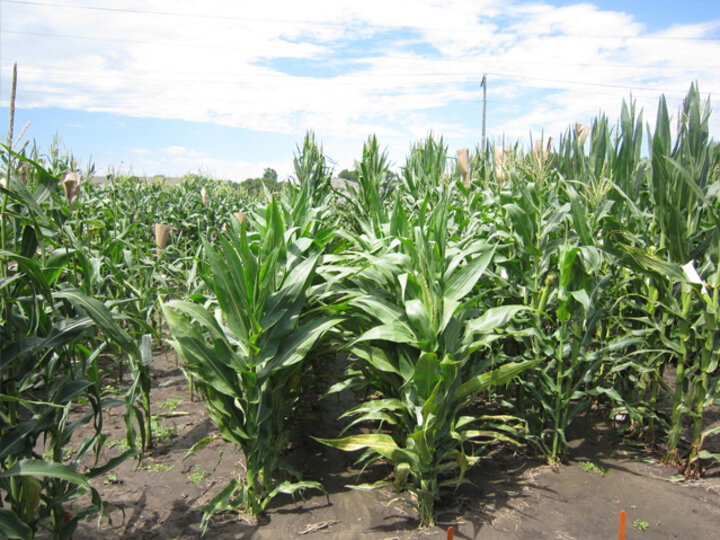
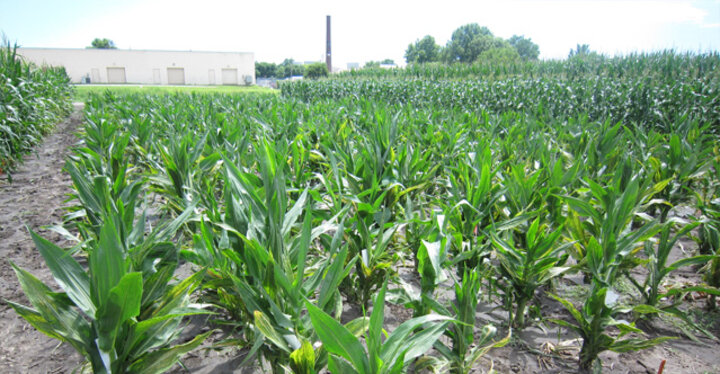
A QPM inbred line developed in South Africa grows robustly in Nebraska.
Several QPM mutagenesis lines appear to be opaque revertants in M2 generation suggesting that modifier genes have been deleted. Deleted chromosomal regions will be identified and used to fine map existing QTLs.
M1 plants resulting from QPM kernel mutagenesis show general loss of vigor compared with regular QPM.
K0326Y QPM is a modified opaque2 mutant with high-lysine but normal vitreous kernels.
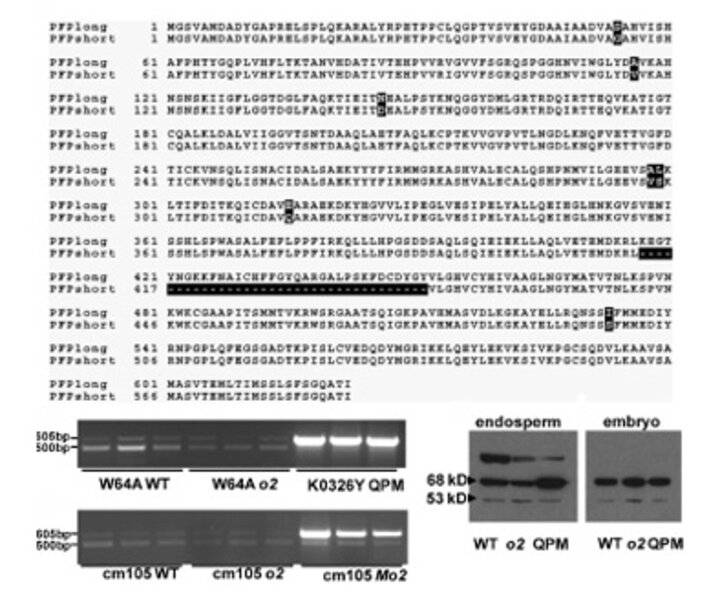
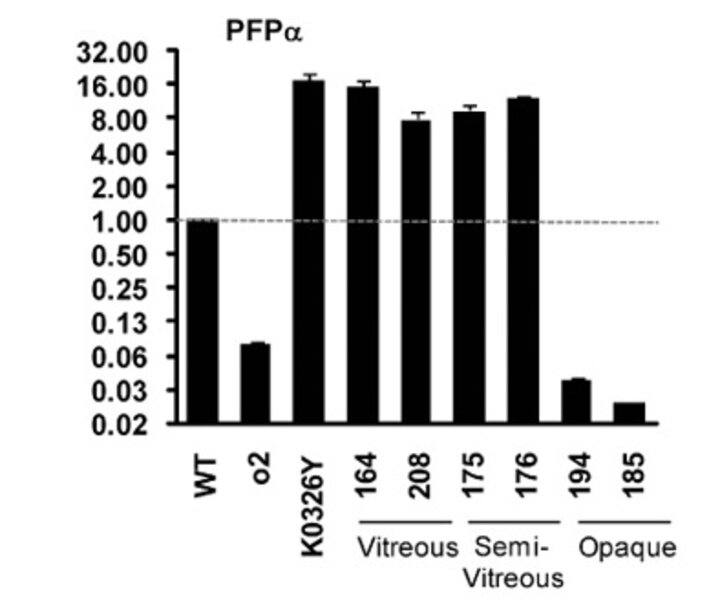
Candidate QPM genes are sequenced to identify polymorphisms between opaque2 and QPM parental genetic backgrounds which could relate to QTLs. There are two closely related different genes for PFP alpha, one of which is an expressed retrogene that lacks introns and a key central exon. We are exploring the possibility that the two proteins have different regulatory functions. Retrogene expression is not induced in QPM. The PFP alpha protein is induced in QPM endosperm but not embryo tissue.
Pyrophosphate dependent phosphofructokinase (PFP) is a key glycolytic enzyme in certain plant stress responses. We have found that a regulatory subunit gene of this enzyme is dramatically upregulated in QPM endosperm and we are exploring its function and potential.
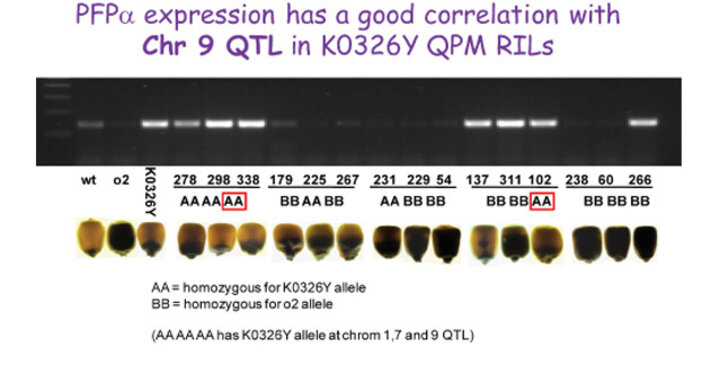
Candidate QPM gene expression is tested in RILs containing the QPM (K0326Y) genotype (AA or W64 o2 genotype (BB) at the three major QTLs for endosperm modification on chromosomes 1, 7, and 9. PFP alpha has good correlation to the chromosome 9 QTL and we are further investigating the relationship to this QTL with eQTL mapping.
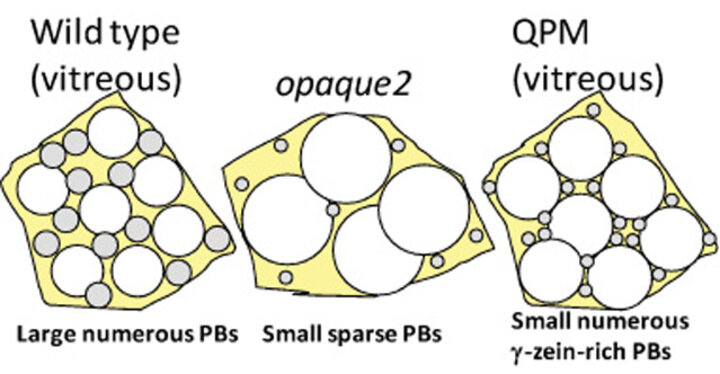
In wild type endosperm cells large and numerous zein protein bodies (grey spheres form a strong, vitreous network with starch grains (white spheres) during kernel desiccation. In opaque2, protein bodies are small and sparse and vitreous endosperm matrix does not from. In QPM, numerous small gamma zein-rich protein bodies recreate the vitreous matrix in the low alpha zein high-lysine background. We are investigating the role and potential of gamma zein in this process.
David Holding inspecting pollen shed in hybrid corn plants.
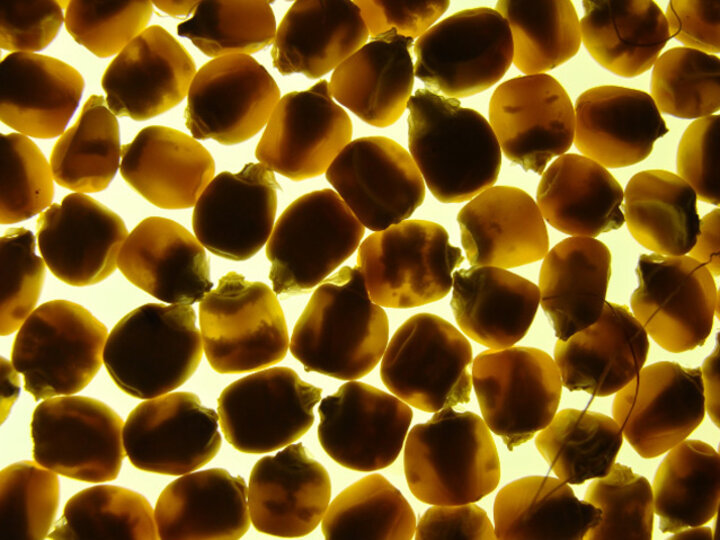
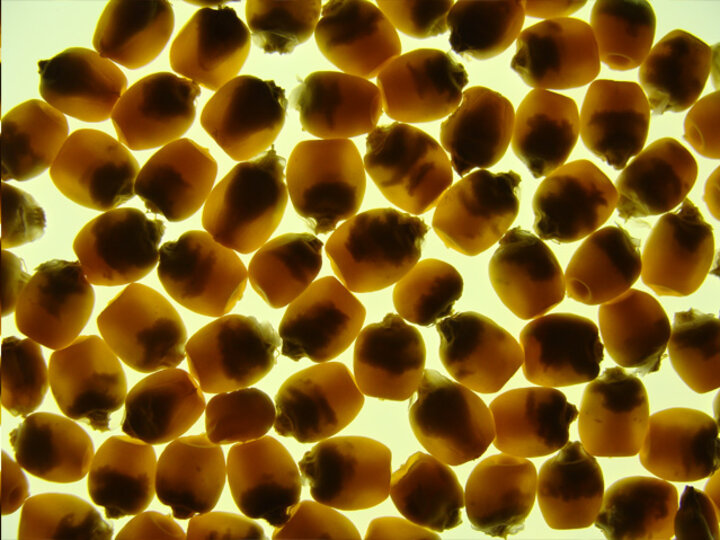
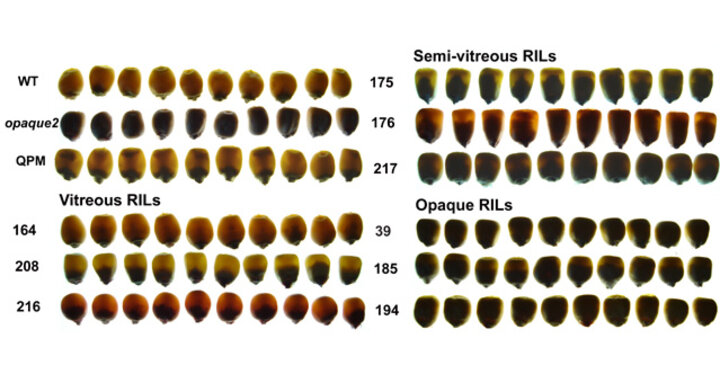
QPM recombinant inbred lines show uniform phenotypes ranging from fully vitreous (modified) to fully opaque (non-modified).
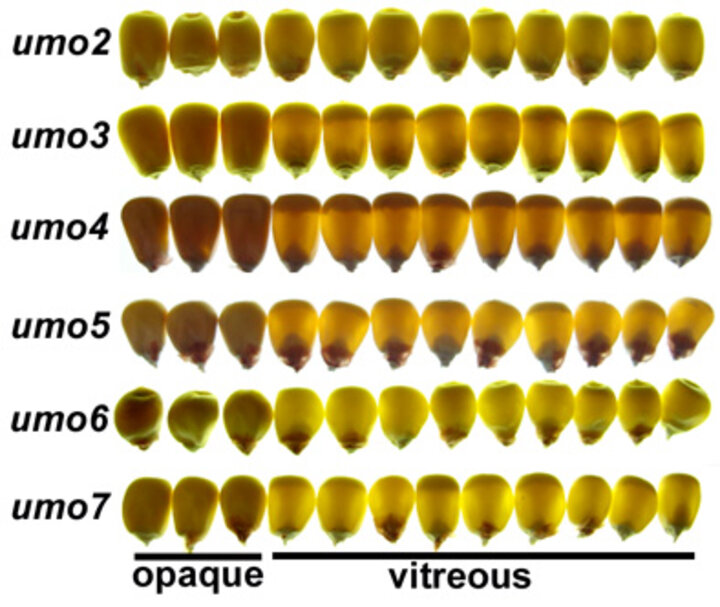
A number of recessive opaque endosperm mutants were generated by transposon mutagenesis at University of Florida. We are investigating the molecular basis of vitreous endosperm development by molecular cloning and functional analysis of the genes causing these opaque kernel phenotypes.
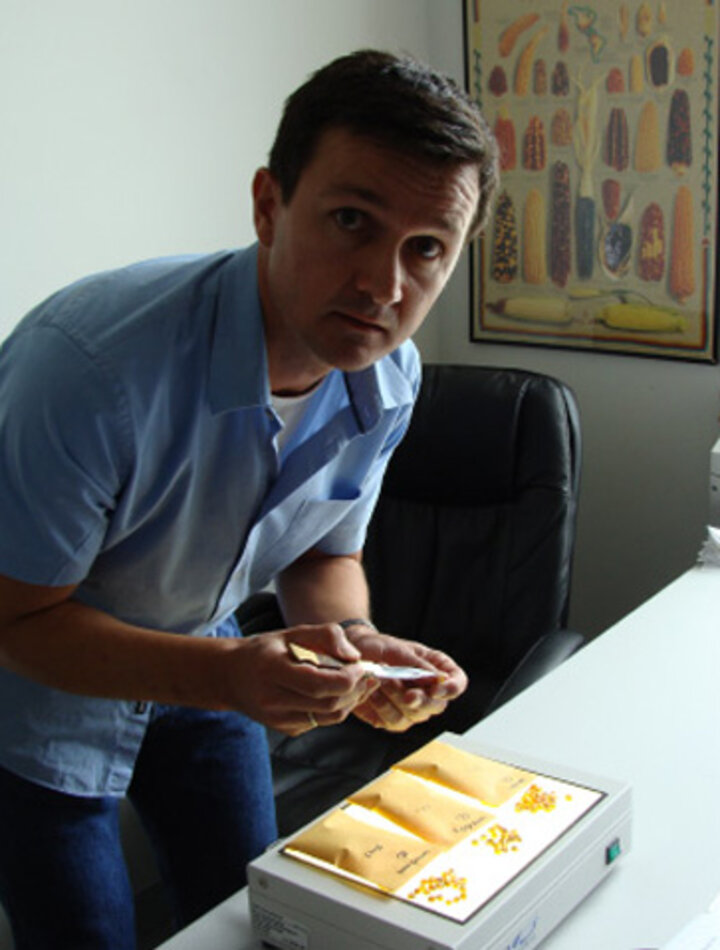
David Holding comparing QPM RILs on a lightbox.
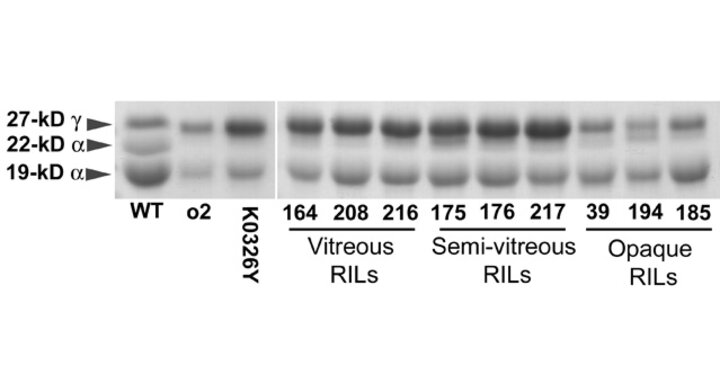
Alpha zeins are suppressed in opaque2 and modified opaque2 (K0326Y QPM) leading to the high-lysine phenotype. Gamma zein is increased in QPM and shows tight correlation to endosperm vitreousness (modification) in recombinant inbred lines.
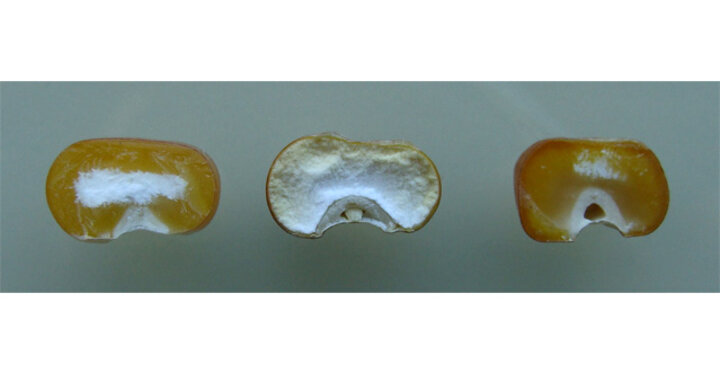
Cracked kernels of wild type, opaque2 and modified opaque2 (QPM) showing the interior endosperm structure.
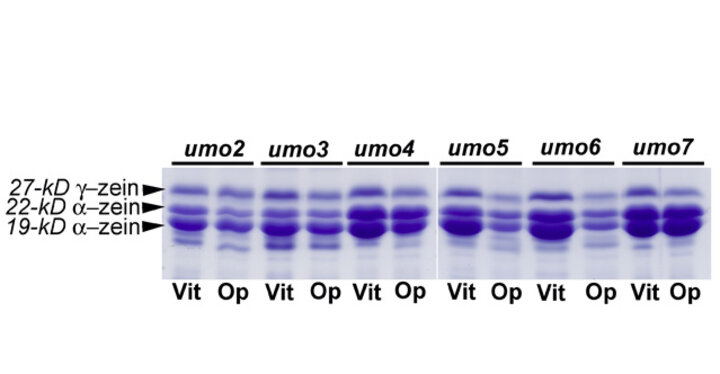
We have identified a series of Mutator transposon generated opaque endosperm mutants which we are in the process of cloning. Vitreous endosperm formation involves zein-dependent and zein-independent processes. Consequently, some of these mutants have visibly altered zein profiles and others do not.